
With high grain prices the new reality, it’s time to find out
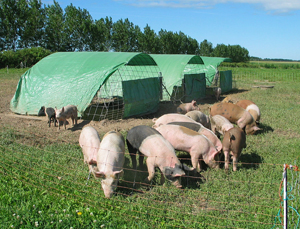
By Jim Van Der Pol Kerkhoven, Minnesota — For years we have fed a little hay in winter to gestating sows by throwing a small bale in their bedding every few days. This is no big deal, especially when compared to the summer pasturing we have been doing for decades. Grain has long remained the major part of the winter gestation ration.
But with major changes afoot with fuel and grain prices, we have decided to look closely and critically at forages with an eye to building a pig production practice that will be more durable going into the future. Sows are the place to start, as their systems seem to handle forage well, and we perceive that they benefit from it. Continue reading “How much forage can a non-ruminant handle?”