
Tips for getting cows bred for a tight window

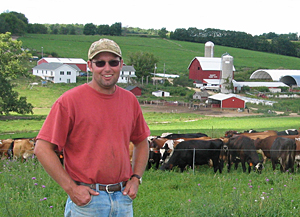
Farmer with cows

By Dan and Ruth Vosberg, South Wayne, Wisconsin — If the only information you’ve heard about dairy farming the last few years came from mainstream farm publications, you’d think that all dairy farmers need estrus synchronization hormones to get their cows bred. Indeed, one of these magazines recently highlighted some of the top reproduction herds in the country. All but one farm used hormones, and those that used them stated that these products were key to their success.

Also, in looking at the average pregnancy rates published, you’d believe that it’s impossible to have a seasonally bred herd. A 60% first-service conception rate (which I consider necessary to be seasonal) isn’t even considered an attainable goal for most dairy farmers. Continue reading “Tips for getting cows bred for a tight window”
Gain without grain: options for finishing lambs

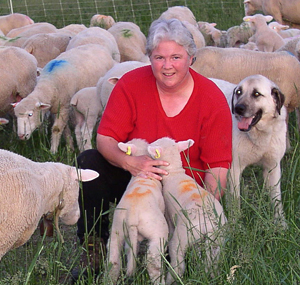
Janet McNally with lambs

By Janet McNally, Hinckley, Minnesota — In the previous two issues I examined late-gestation ewe rations: and ewe lactation/early-lamb growth rations using conventional hay/grain and pasture-based solutions. In late gestation, the relatively little grain required had only a small impact on total feed cost. Pasture presented a much larger cost-saving advantage over grain/hay during the lactation phase. This month, let’s look at finishing, taking the lamb from weaning at 120 days of age (75 lbs.) through to 110-120 lbs.

As the accompanying table (made from available data and personal experience) indicates, there is potential for substantial savings with pasture finishing. Yet this stage and the relative benefits of alternative rations are difficult to analyze, because the number of possible options is so great. Continue reading “Gain without grain: options for finishing lambs”

Too much ‘cheaper,’ not enough ‘better’

Jim VanDerPol

By Jim Van Der Pol, Kerkhoven, Minnesota — I have been thinking about the poster the Kerkhoven blacksmith had hanging on the wall a half century ago, when I would follow Dad everywhere. This was in the mid-’50s, when blacksmiths were still called that, in part because they were not at that time so very far away from shoeing horses. But the horse I noticed was the one on the poster. It was just a line drawing of a horse with its tail raised and a steaming pile of fresh manure on the ground below. Below was inscribed this thought:

Buying quality is like buying oats.

You can buy fresh clean oats for which you will need to pay a fair price.

Or you can buy oats that have already been through the horse.

That comes a lot cheaper. Continue reading “Too much ‘cheaper,’ not enough ‘better’”